Why Old Facial Injuries Can Look Worse Over Time

You did the hard work of recovering. The stitches came out, the swelling went down, and for a long time, you might have felt like the injury was behind you.
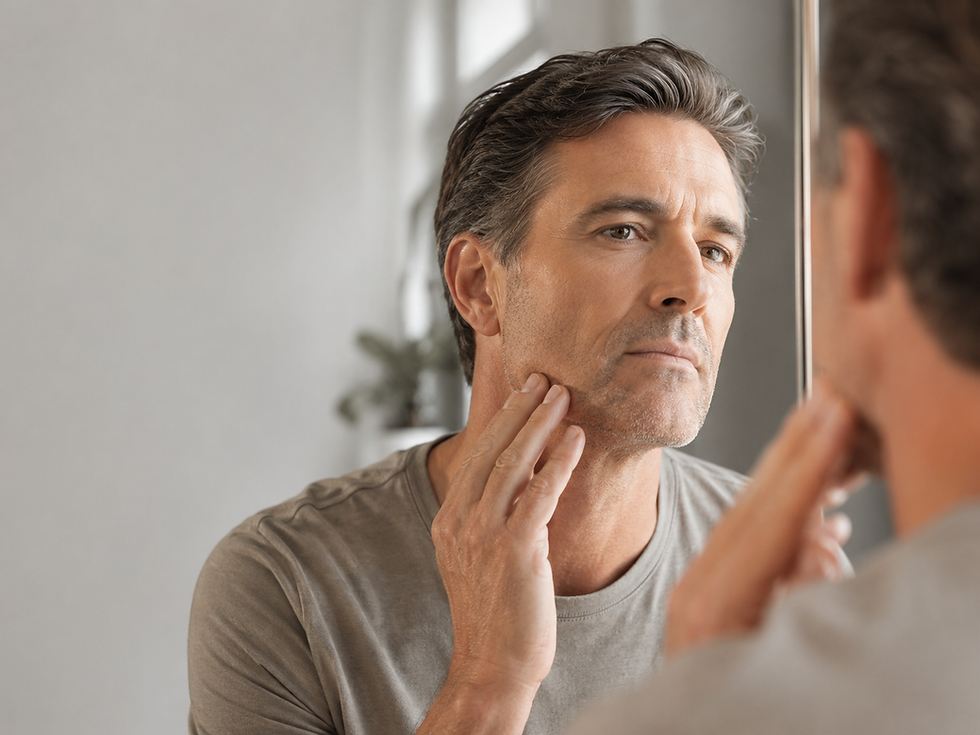
But lately, when you look in the mirror or see yourself in a photo, that old injury seems more noticeable than it was five or ten years ago. Perhaps a scar feels tighter, or a side of your face that was once symmetrical now seems to "droop" or hollow out.
Patients often come to me feeling as though they are backsliding or that their initial repair has "failed."
If your old facial injury looks worse over time, it is rarely a failure of the original treatment.
Instead, it is the result of a complex interaction between your body’s natural aging process and the way injured tissue matures. Understanding this interaction is the key to moving from frustration to a proactive plan for restoration.
The "Hidden" Timeline of Facial Healing
We often think of healing as a short-term event, but the face is a living, shifting architecture of bone, fat, and skin. When trauma occurs, the "blueprint" of that architecture is altered.
1. Scar Tissue Remodeling and Contraction
A facial scar from an accident doesn't just sit on the surface; it’s rooted in the deeper layers of the tissue. Over the years, scar tissue undergoes a process called contraction. As the collagen fibers within the scar tighten, they can pull on the surrounding healthy skin.
This tension can subtly distort nearby features, pulling at the corner of an eye, the edge of a lip, or the curve of a nostril. What was a flat, pale line in your 20s can become a visible "tether" in your 40s.
2. The Acceleration of Aging
The most significant reason a facial injury changed your appearance years later is simply the loss of facial volume.
As we age, we naturally lose fat and bone density. In a healthy face, this happens relatively evenly. However, injured tissue often lacks the same blood supply and structural resilience as uninjured tissue.
When the face begins to thin out with age, the "scaffolding" that was hiding an old fracture or a deep scar disappears. The injury that was once camouflaged by youthful fullness is suddenly unmasked.
3. Muscle and Nerve Fatigue
If your injury involved any degree of nerve damage, the muscles on that side of your face may be slightly weaker. In your youth, your skin’s natural elasticity can hide this minor imbalance.
But as skin loses its "snap," the side with weaker muscle support may begin to sag faster than the uninjured side, leading to a noticeable facial asymmetry that wasn't there before.
When the Surface Tells an Incomplete Story
I find that many patients are surprised to learn that their concern isn't actually the scar itself, but what is happening underneath it.
If you have a facial scar from an accident that seems to be "sinking," it is likely that the trauma caused a loss of the underlying fat pad at the time of the injury. As the rest of your face matures, that specific area of volume loss becomes a focal point.
This is why a "skin-only" approach, like a cream or a superficial laser, often fails to provide the relief patients are looking for. We have to address the foundation to fix the surface.
Options for Long-Term Restoration
The good news is that we are not stuck with the results of a decades-old injury.
Because the tissue has fully stabilized, we can often achieve a more refined result now than was possible in the emergency room years ago.
Advanced Scar Revision: We can use facial trauma and scar revision techniques to "release" the tension of a contracting scar. By repositioning the scar to follow the natural tension lines of your face, we can make it significantly less visible.
Volume Replacement: If an old injury has caused a hollow look, we can use fat grafting or structural fillers to replace the lost "padding." This camouflages the injury and restores facial symmetry.
Structural Realignment: If an old fracture healed slightly out of place, we can sometimes perform minor bone contouring to bring the two sides of the face back into a more harmonious balance.
Understanding Your Evolving Profile
1. Will my old scar ever stop changing?
Scars generally stabilize after two years, but they are always subject to the changes in the skin around them. If your skin loses elasticity due to sun exposure or age, the scar will naturally appear more prominent.
2. Can I get surgery on a scar that is 20 years old?
Absolutely. In many ways, older scars are easier to treat because the tissue is "quiet" and no longer inflamed. There is no expiration date on seeking a better result.
3. Is scar revision purely cosmetic?
Not always. If a scar is pulling on your eyelid and causing dryness, or if a scar near your mouth makes it difficult to speak or eat comfortably, revision is a functional necessity.
4. Why does my injury look worse in certain lighting?
As we lose facial volume, shadows become deeper. An old injury often creates a small "divot" or "ridge" that catches overhead light, casting a shadow that makes the asymmetry look much more dramatic than it actually is.
Reframing the Path to Healing
It is important to remember that your face is a work in progress. An injury that happened years ago was a chapter in your story, but it doesn't have to be the final word on your appearance.
If you find yourself constantly adjusting your hair or your posture to hide an old injury, you are spending a significant amount of mental energy on a problem that has a physical solution.
My goal at FacePLUS+ is to help you close that chapter for good. When you are ready to see what modern reconstructive techniques can do for a "settled" injury, I invite you to schedule a consultation.
We will look at your anatomy with fresh eyes and find a way to bring your profile back into the balance you remember.
Disclaimer: The content of this blog is for informational purposes only and should not be considered medical advice. This information is not intended to diagnose, treat, cure, or prevent any disease. Always consult a qualified healthcare professional for personalized advice and treatment options. Results may vary depending on individual circumstances.


Comments